
Winter with Zetetick: all our seasonal recipes
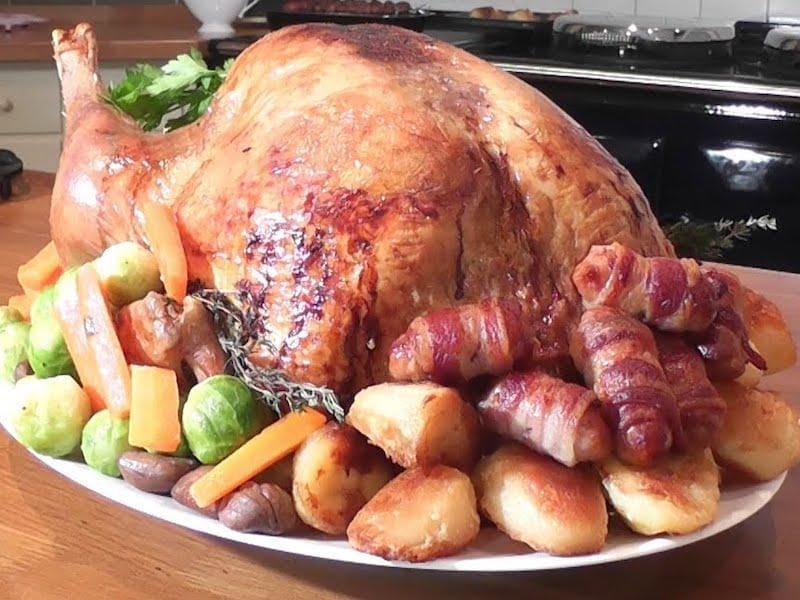
Cooking a turkey in an AGA takes a little planning, particularly when the potatoes and everything else need oven space too. Here are the traditional fast, medium and slow methods in one place.
Our recipes are free to use. If you enjoy them, please support Zetetick Housing with a donation.
Jump to ingredients · Jump to method
Before the turkey goes in
Keep raw turkey covered in the fridge at 0–5°C, within its use-by date. Defrost a frozen bird fully in the fridge according to the packaging. If it will not fit, arrange suitable refrigerated storage in advance: wrapping it does not make a garage or an unmeasured “cold place” safe.
Follow the supplier’s instructions about taking the bird out before cooking. Some specify about an hour out of the fridge; do not extend that into several hours or overnight. A fridge-cold turkey is not automatically unsafe, but the cooking method must suit the bird and its starting temperature. See the FSA’s chilling and defrosting guidance.
For stuffing, the FSA recommends a separate dish. If your turkey supplier’s instructions allow neck stuffing, use those specific timings, fill loosely just before roasting and check the stuffing as well as the meat. Do not pack the main cavity. Our chestnut and sausagemeat stuffing recipes explain both approaches.
Ingredients
- 1 fully defrosted turkey, weighed before cooking
- Butter or goose fat, for coating
- Streaky bacon, optional
- A small cup of water for the slow method
Method
- Check that your AGA is fully up to its normal cooking temperature. These methods are for traditional heat-storage models, not a universal setting for every modern AGA. Follow your own model’s instructions and the turkey supplier’s advice.
- Coat the turkey with butter or goose fat and add bacon if you like. Place in the AGA roasting tin. Choose one of the methods below and use the table as an approximate planning guide.
- Fast method, traditional 2-, 3- and 4-oven AGA: hang the tin from the lowest runners in the roasting oven. After about an hour, once browned, cover loosely with a foil tent. Continue in the roasting oven for the total time shown.
- Medium method, traditional 3- and 4-oven AGA: start in the roasting oven for about an hour, cover loosely with foil, then transfer to the baking oven for the additional time shown.
- Slow method, traditional 2-, 3- and 4-oven AGA: use the roasting tin without a grill rack and add a small cup of water. Start on the floor of the roasting oven for about an hour, tenting with foil as it browns. Transfer to the simmering oven for the additional time shown. Do not start a raw bird in a cool oven or treat a warming/slumber setting as a simmering oven.
- Check the turkey and any stuffing with a clean food thermometer. Continue cooking until it has reached a safe temperature throughout; the table alone cannot establish that it is done.
AGA turkey cooking times
These are the traditional timings used in our original guide and in the AGA Christmas cooking guide. They are approximate. The fast column gives the total time; the medium and slow columns are additional time after the first hour in the roasting oven.
| Turkey weight | Fast: total | Medium: add | Slow: add |
|---|---|---|---|
| 3.6–5.4kg / 8–12lb | 1¾–2 hours | 1½–2½ hours | 3–5 hours |
| 5.4–7.25kg / 12–16lb | 2–2½ hours | 2½–3½ hours | 5–7½ hours |
| 7.25–9kg / 16–20lb | 2½–3 hours | 3½–4½ hours | 7½–10 hours |
| 9–10.8kg / 20–24lb | 3–3½ hours | 4½–5½ hours | 10–12½ hours |
| 10.8–12.6kg / 24–28lb | 3½–4 hours | 5½–6½ hours | 12½–15 hours |
Check it is cooked, then make room for the rest
Check the centre with a clean food thermometer: it should reach 70°C for 2 minutes, or 75°C for 30 seconds. Check more than one thick part of the bird, avoiding bone, and the centre of any stuffing. See the Food Standards Agency’s cooking guidance.
Once cooked, rest the turkey loosely covered for about an hour before carving. That gives the meat time to settle and frees the roasting oven for potatoes and trimmings. As an AGA owner, I find finding room for everything else is often the real challenge.
Plan the vegetables, gravy and stuffing around that resting time. Cool leftovers promptly, refrigerate within 1–2 hours and eat within 48 hours or freeze them.


 Sussex charity walk: Hike4Homes 2026 archive
 Giving: ways to support Zetetick without spending money
 Charity donations: supporting Zetetick’s work
 Life partners - Rosie's story
 A day in the life of our charity staff and volunteers